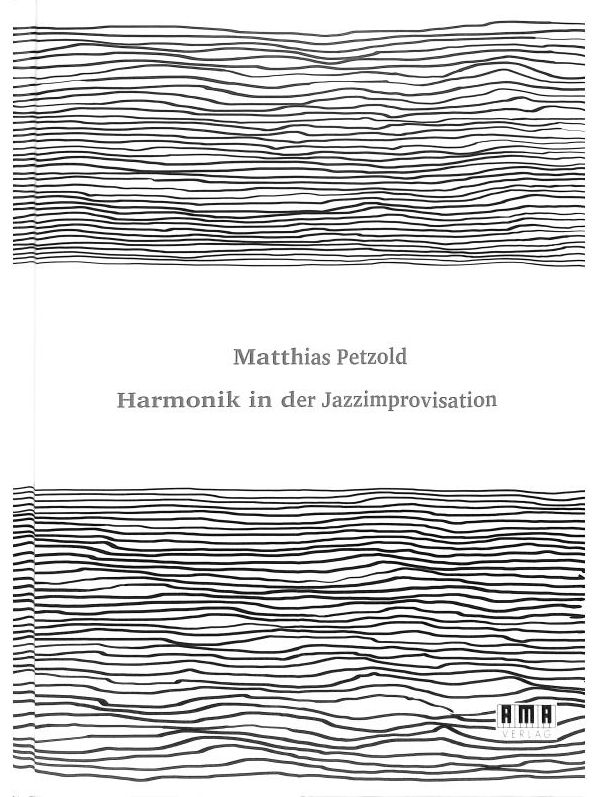
- ISBN
- 978-3-89922-311-8
From the preface:
A book on harmony. A book on jazz harmony. What sets it apart from the many others that have been published over the past decades? Three things mattered to me in writing this book:
- This book on harmony is intended for improvisational practice, and it grew out of that practice and out of teaching it.
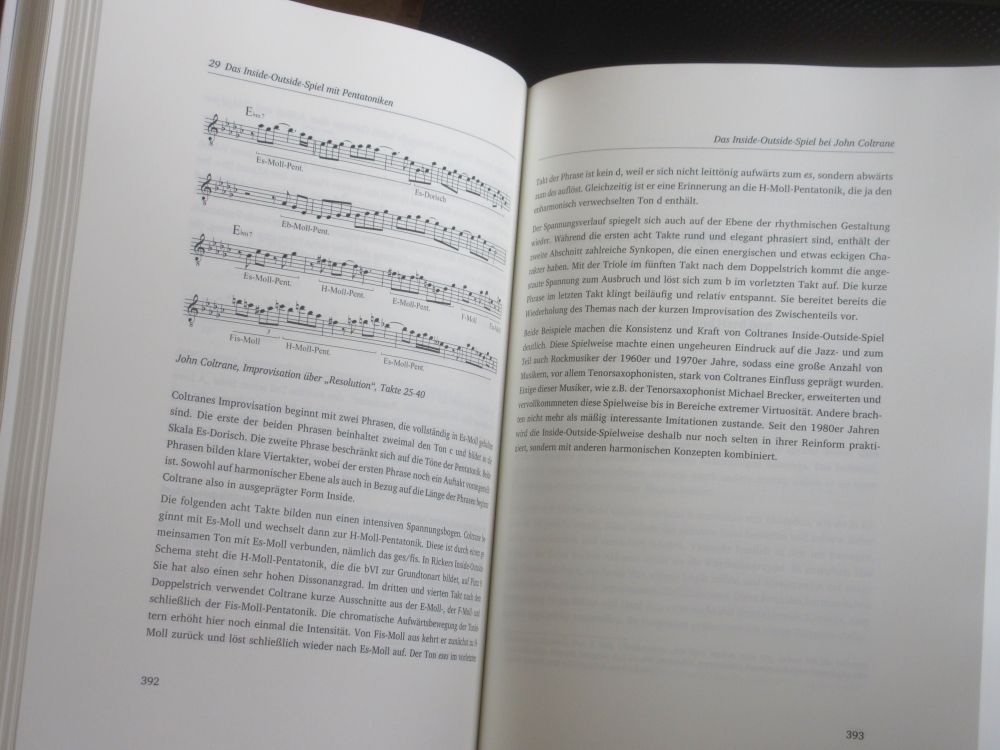
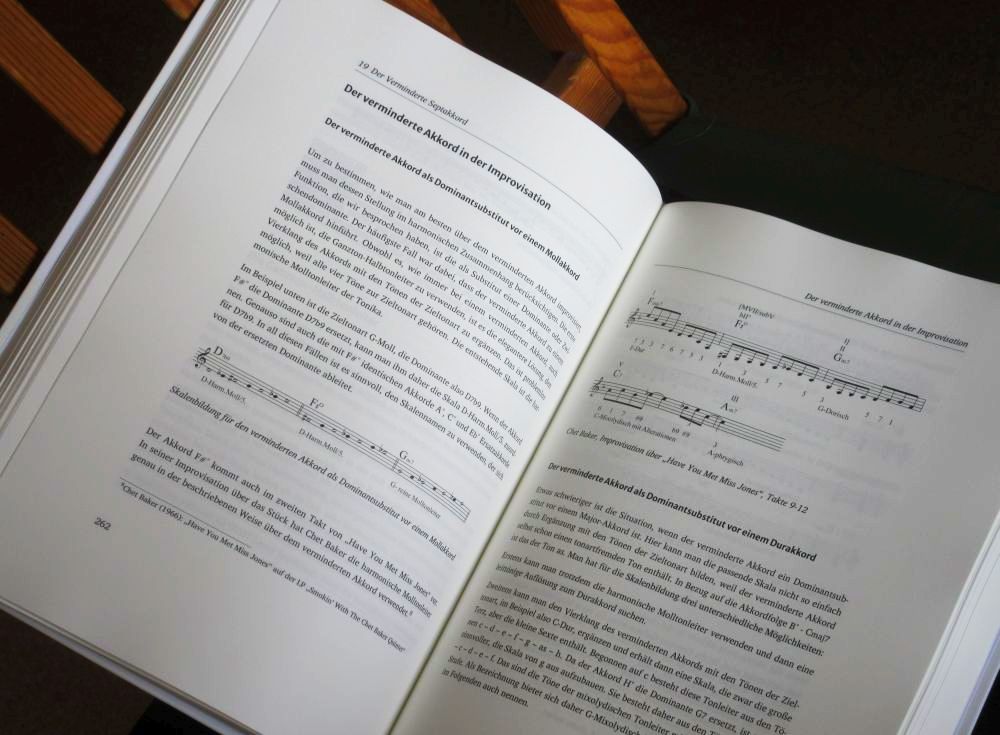
- It is based on the experience of tonality. Starting from the first note and its sound, it develops in a coherent way how chords are built and the laws by which chord progressions develop. It shows ways of using the tonal relationships within chord progressions to shape arcs of tension.
- It takes the great masters of improvisation in jazz as its model and uses examples to explain the different ways that have been found, over the course of jazz history, to create particular sounds, and tension and release.
The table of contents can be downloaded here as a PDF:
Table of contents of “Harmonik in der Jazzimprovisation”
The book is published by AMA-Verlag and can be ordered through any bookshop.
Press
“This is not only a very well-structured textbook that makes things enormously easier to understand, but also an accomplished survey of everything that has shaped jazz harmony, past and present.”
Jazzpodium 2/2022
“In this large-format publication Matthias Petzold takes on the many-layered and many-sided subject of harmony in jazz improvisation. The focus is quite deliberately on improvising, rather than on playing well-known jazz standards.
Alongside the absolute basics (the blues form, say, or how keys are related through the circle of fifths), Petzold opens up approaches to more complex harmonic patterns in a wonderfully clear way.
Numerous music examples invite you to try things out, play and improvise, so that the time simply flies while you read.”
“In his textbook Matthias Petzold lets you experience the connections between physics and music theory at first hand. In doing so he fosters a deeper understanding, which makes the book a valuable source for anyone who is driven by the question why.”
Philipp Gerschlauer, saxophonist